
Two Years Later: How Buncombe County Kept Democracy Running after Hurricane Helene
In late September 2024, Hurricane Helene struck and devastated large parts of the Southeastern United States, including western North Carolina. Two years later, Buncombe County Director of Elections Corinne Duncan shared how she rallied her team and kept democracy running through the storm, and how she’s preparing for the future.
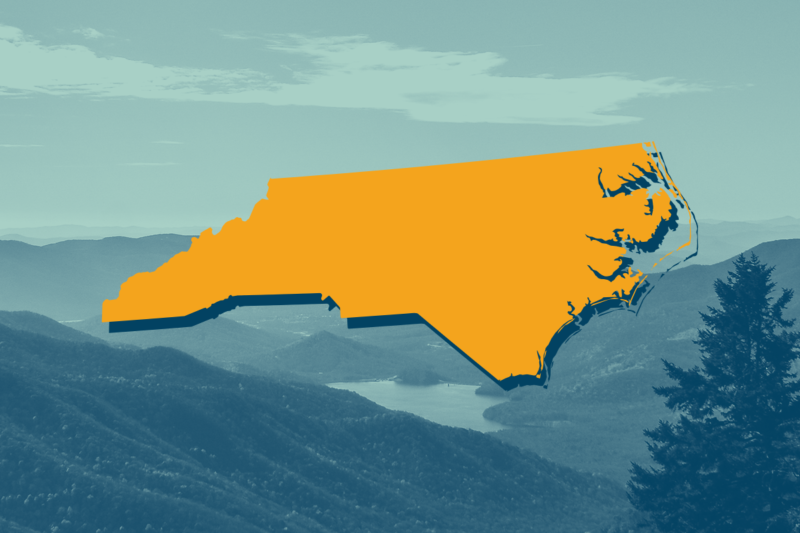
In Asheville, North Carolina, Corinne Duncan meets with her county Emergency Operations Center (EOC) at least once every quarter to plan for scenarios that could affect 216,000 registered voters across 80 precincts spanning 680 square miles, including swaths of the Blue Ridge Mountains.
“We call it All Hazards planning,” Corinne said of the comprehensive session, adding, “We follow it up with a briefing of all the top brass of the different agencies: law enforcement, fire, legal, the PR team, and so on.” Typically, the next step is a slate of tabletop exercises bringing together staffers across all agencies, covering scenarios from traffic accidents to civil disturbances to poll workers being injured on the job.
In September 2024, having completed her first set of All Hazards meetings, Corinne was preparing for the usual large group simulations, which included tornado watches and protocols — even though FEMA rated her county an unlikely target. But that fall, tabletop work was replaced by a real-life exercise. As Corinne said later of the deadliest storm to hit the United States since Hurricane Katrina (and the deadliest flood to hit her area in over 100 years): “Nothing really prepared us.”
Bracing For the Storm
On Thursday, Sept. 26, 2024, the National Weather Service called an emergency briefing for the county regarding a coming rainstorm. As the information was shared, Corinne kept hearing the word “catastrophic.” On her way home, roads were already beginning to wash out, and her condo neighbors were beginning to move their belongings upstairs. The storm hit in earnest the next day, and within the county’s biggest waterway, the French Broad River, Corinne saw the signs: “I saw little animals disoriented, snakes and frogs and salamanders popping out of the water. That gave me a clue: oh, god, if the aquatic animals are freaking out … then the river was overspilling its banks, and I watched it rise multiple feet in about ten minutes.”
Cellphones went out, then electricity. Corinne saw power lines downed in the water in front of her condo. “Then it was really quiet,” she recalled. “It was so, so quiet. That was a big shift. It was just us in our community talking — no text, no internet. Just the radio. The more information we started to get, the more we realized this was going to get bigger and bigger.”
Business — Not As Usual
Once Corinne had ensured that she and her neighbors were stocked with food and water for the next few days, and that they would not need to evacuate their building, she felt a shift. “A switch just happened in me. There were just weeks to go until Election Day, and it was like — it is my mission to make sure we will vote this election. And I need to go figure out how to make it happen.” Avoiding the muddiest and most flooded streets, she drove to her office, which by luck was housed in the county IT building, which still had power — and was still connected to the county network.
Corinne spoke to her partners at the EOC and the State Board of Elections, quickly learning that the storm’s impact stretched far beyond Buncombe County and across the southeastern United States. “The 911 center was overwhelmed,” she said. “The emergency folks were focused on the first responders, on setting up shelters and distribution centers, and where to get water.” Radio briefings had also begun, covering everything from the state of roads, utilities, and vital resources (especially gasoline) to broadcasts in search of missing loved ones.
Providing for Voters
Corinne’s team had many questions to answer as early as possible: How many poll workers were facing evacuation? How many early voting locations and Election Day sites were still intact? Was mail still being delivered? Slowly, they pieced together solutions.
In addition to being a channel for lifesaving communications, radio became key to Corinne’s post-storm election operations. “Mass texts weren’t working for poll workers — everyone’s service was different,” she recalled. “We put up paper flyers and made announcements in person at every supply center we could, including fire departments, which were becoming major community hubs. Through in-person briefings, radio, word of mouth, any working phone we could find, and our own social media, we shared as much as we could about changes to the election. It was the rare occasion when everyone was driving down the road and hearing everyone else listen to the same radio station.”
Absentee voting had already begun in the county, to the tune of about eight thousand ballots — which had, thankfully, gone out the day before the mail facility flooded. The North Carolina State Board of Elections acted quickly, declaring a state of emergency and allowing evacuated Buncombe County residents to turn in absentee ballots in other counties (a practice normally not allowed). Four of 14 early voting locations and 17 of 81 Election Day polling sites also had to be adjusted — fortunately, far less than the half Corinne had expected. Some were flood damaged, but many had also been commandeered for a new purpose. “Many of our polling locations were being converted for storm response as distribution centers and shelters, so churches and other groups began reaching out to offer their facilities,” she said.
While replacing or consolidating locations, Corinne’s team worked hard to ensure that nobody had to travel an overwhelming distance to vote. One of the remotest and hardest-hit areas was Garren Creek, a 15-mile drive outside Asheville — but no normal 15 miles. Bridges were out, and Helene’s rainfall had liquefied much of the county’s soil, causing thousands of landslides across the region. Valleys were scoured down to the bedrock, every tree and plant stripped away. “The roads were just caved in, and you had to drive around it,” Corinne said. “There was devastation everywhere, and you could see pieces of houses in the river. It was very intense.”
Corinne drove down Highway 9, then down the remains of a one-lane road to the furthest usable spot for Garren Creek’s new mobile voting location: the parking lot of a restaurant. “Normally we have voting locations inside a building, but there was nothing usable out there, so we worked with state emergency services,” she said. Nearby, rural life carried on: a penned horse watched as the team set up the outdoor tent to welcome Garren Creek voters.
The office worked to cobble together new polling locations, communications networks, and poll worker teams — one-third of Buncombe’s committed poll workers were unable to work during early voting due to evacuation. Power slowly came back on, and for her birthday on October 15, Corinne’s faucet finally ran non-potable water (drinking water would take several weeks more). By Election Day, 90% of her poll workers were also back in action.
Despite the impact of Helene, Western North Carolina edged out the rest of the state in voter turnout. “We are an engaged community anyway,” explained Corinne, “but I think that during that time, people wanted to do something normal. Something important. That spirit was alive in everyone, and I think voting goes right along with that.”
Preparing for the Future
Corinne and her team have learned from 2024. “We now know a lot more about flood risks, blockages from landslides, and the strengths of old-school communication,” she said. “With all the trees downed by Helene, wildfires are now more of a consideration, too.” Hurricane-specific preparations include more generators, an expanded list of reliable vendors, a dedicated radio plan and budget to take advantage of North Carolina’s strong media market, and additional poll worker training for emergency scenarios, like machines going down: “Our elections can be run without machines if needed, and we’re really making sure folks have that muscle memory in place and feel ready.”
For offices trying to plan for their own once-in-a-century unforeseen event, Corinne recommends building strong relationships in advance, both with government agencies and within the community. “Every single time, after disasters, people come together,” she emphasized. “You can count on that happening. In addition to all of our state connections, one of the oldest moving companies in Asheville stepped in to help us relocate our polling sites. You just need to start where you are and communicate, communicate, communicate. Make those relationships beforehand so people know to watch out for you even when you can’t talk directly to each other.”
What helped her stay calm under stress? “Psychological safety is huge in elections,” she reflected. “If you feel there are people who are going to support you, that allows you to support others. You don’t shut down. Your switch flips on. And then, it’s just the mission. If you keep that in mind, if that is your north star, it helps you have direction when there is chaos and uncertainty.”
Read more at Come Hell or High Water, Buncombe County’s community archive of the storm, and learn more about the Emergency Planning standard co-developed with nearly 300 local election officials by the U.S. Alliance for Election Excellence.